SABLE CROSSING, Ohio — Sable County is replacing 46 pavement markers along a rural curve after drivers and road crews said the devices stopped returning headlights and instead showed a stable pattern of unfamiliar stars after dark. The road remains open with temporary edge posts and a reduced advisory speed.
The raised markers guide traffic through a wooded section of County Road 18 where paint becomes difficult to see in rain. Highway supervisor Len Voss said a snowplow driver reported the dark line before dawn Monday. The markers were clean and intact, but none flashed white or amber as the truck approached.
During an evening inspection, workers saw small points of light beneath the clear faces. The points did not brighten when illuminated and were visible only from within a few feet. Voss described them as a dark sky seen through a shallow opening, although the marker housings remained solid when viewed from the sides and bottom.
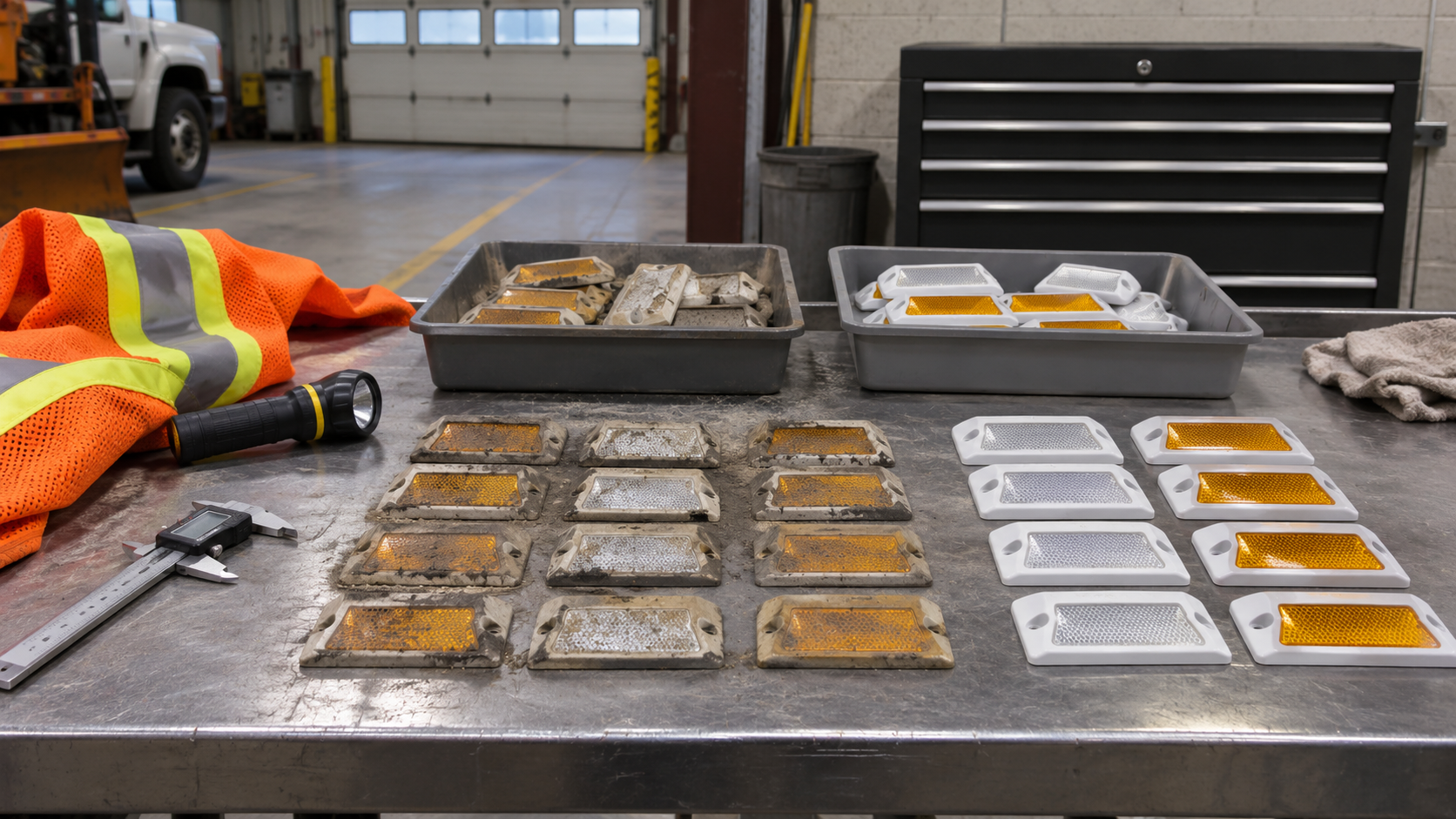
Crews removed eight devices and replaced them from sealed stock. On a garage bench, the used markers appeared ordinary under ceiling lights. After the lights were switched off, each showed the same cluster: seven bright points around a dim red one, with a thin pale band crossing one corner. No employee recognized the arrangement from common star charts kept for navigation training.
The pattern remained fixed when the markers were turned, covered or carried indoors. A handheld magnet, radio and infrared camera produced no change. Workers opened one housing with a saw and found the expected molded reflector and adhesive pad. Both halves continued to show the full field after separation, including stars that had appeared behind the cut line.
Voss ended the inspection when several employees reported difficulty judging the distance between the points. The county boxed the removed markers individually, assigned two-person night crews and asked residents not to stop on the shoulder to look at them. No collision has been linked to the loss of reflection, though two drivers said they braked because the curve seemed to continue farther into the trees.
Raised pavement markers can lose reflectivity through abrasion, moisture and winter plowing, said Tessa Marr, a transportation materials engineer retained by the county. Internal cracks may scatter pinpoint light, and phosphorescent contamination can glow after exposure. Marr said such defects would normally respond to a flashlight or fade over time rather than preserve an identical field inside broken pieces.
The replacement work affects less than half a mile and is expected to cost $6,800 from the county's maintenance reserve. New markers installed Tuesday reflected normally through rain. The old devices will remain county property while Marr tests the resin and confirms their manufacturer, and officials said they will not be sold or displayed.
At 2:10 a.m. Wednesday, a garage camera recorded the points in all eight boxes shifting together for about six minutes. The bright cluster moved out of view, and a broad unlit shape crossed the pale band without covering it. Nothing moved inside the garage, and the sealed boxes remained in their marked positions.
By daylight, workers found fine gray dust beneath each box. Laboratory staff identified ordinary limestone from the road shoulder, though the marker seams had been cleaned and the shelves above them were bare. Voss vacuumed the room and moved the boxes to a steel cabinet with no exterior window.
The county completed the curve Thursday and counted every new marker before leaving. At dusk, all 46 returned the inspection truck's headlights. A forty-seventh point shone beyond the end of the work zone from the center of the unmarked pavement. It showed the red star without reflecting the truck, and the crew painted a chalk circle around it rather than trying to lift it from the road.