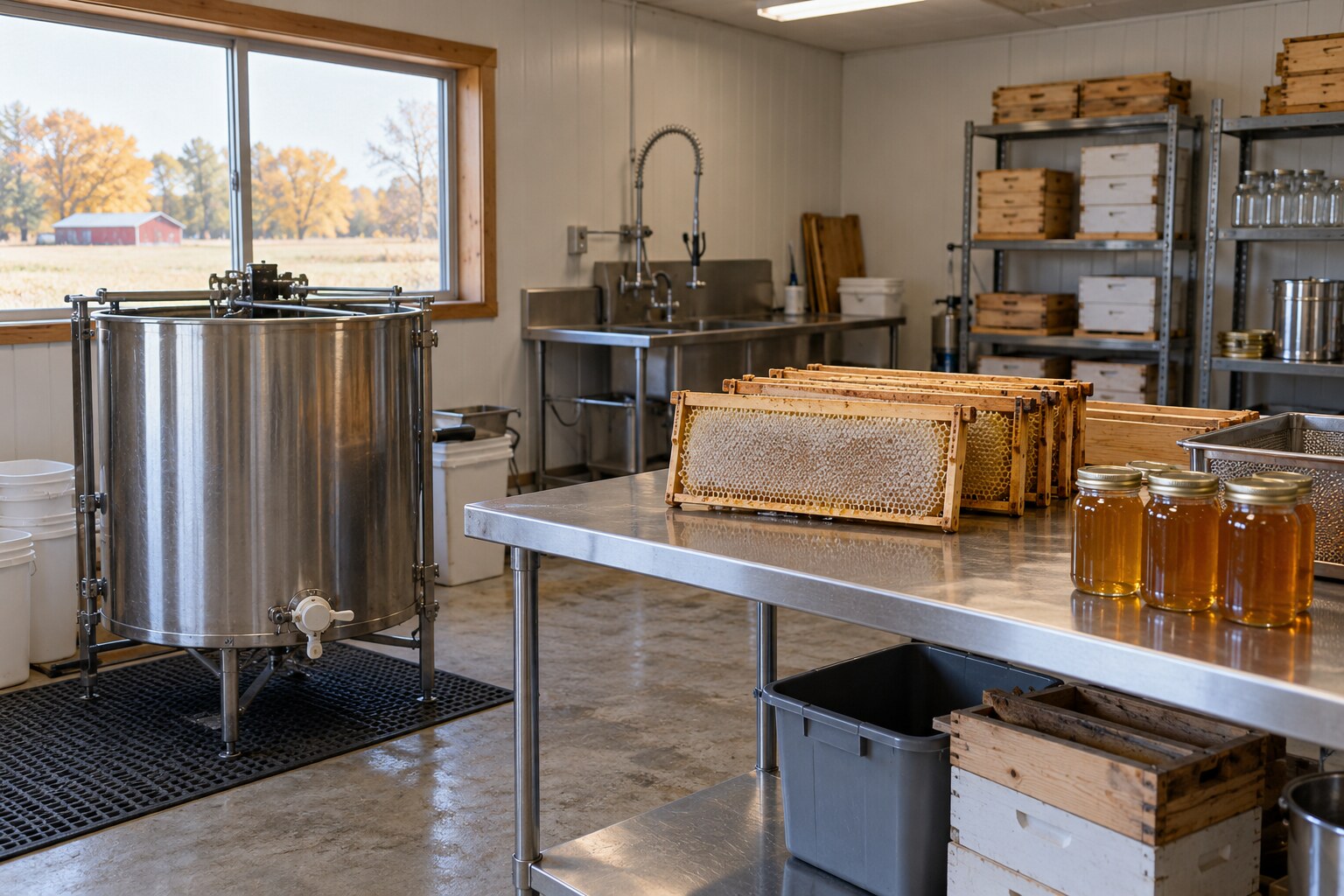
SABLE FORK, Nebraska — A beekeepers cooperative is holding 640 pounds of autumn honey after warmed comb from nine member apiaries produced fragments of voices that the members recognized as conversations held near their hives. The honey has not entered retail jars, and preliminary food-safety screens found no contamination.
Sable Fork Beekeepers Cooperative extracts and grades honey for 31 small producers. Members bring sealed frames to its rural workroom, where the comb is warmed to about 92 degrees before wax caps are cut away and honey is spun into settling tanks. The first voices were heard Thursday while six frames rested in the warming cabinet.
Manager Reed Solak said the sound resembled low conversation through a closed door. Employees turned off the extractor, ventilation fan and radio, but the voices continued from a frame belonging to beekeeper Mara Ives. She recognized a discussion in which she and her brother decided where to place a water pan during July heat.
The exchange was not complete. Individual words emerged from different parts of the comb, separated by wing-like buzzing and long quiet intervals. Ives said the order was accurate, including her brother correcting the name of a field road. Neither person had recorded the conversation, and her brother was not present at the cooperative.
Workers heard other fragments as more frames warmed. One repeated a child's counting during a hive inspection. Another carried the scrape of a gate followed by a producer reminding himself to replace a cracked cover. Members recognized ordinary remarks rather than speeches, radio programs or telephone calls. Frames handled at the same time did not repeat the same material.
The cooperative stopped extraction and canceled a Friday bulk pickup for a bakery supplier. Solak said sealed jars already packed from summer lots are unaffected. Members may reclaim unopened frames, but most agreed to leave them in a locked cooler until the cooperative determines whether the wax or honey is carrying the sound.
Honeybees communicate through vibration, odor and movement, and comb readily carries mechanical signals, said Yara Pell, an extension apiculturist who visited Saturday. Bees can respond to low-frequency sound, but Pell said no known hive process stores an intelligible human conversation and reproduces it months later when wax is warmed.
Pell used contact microphones on three frames. The signal came through the comb before it was audible in the room and stopped when the frames cooled below 70 degrees. Chemical screens found ordinary beeswax, pollen and trace propolis. The honey met moisture and antibiotic standards, though Pell said those tests do not address the reported voices.
The hold has disrupted a cooperative that earns most of its income during fall extraction. Solak refunded two processing deposits and arranged dry storage for empty supers. The canceled buyer accepted a later delivery date, but members said they would not sell the lot without deciding whether customers could encounter private speech in a kitchen or bakery.
Retired producer Ellen Rusk listened to a frame from a yard she closed after her husband's death. She identified his voice describing which colonies needed winter boards, a routine he dictated while she took notes. Rusk asked that the frame remain intact. She said the words were useful at the time and did not become a message merely because he could no longer repeat them.
During testing, Pell removed one wax cap with a sterile blade and placed it on a separate sensor. The exposed cell went quiet while the detached cap continued carrying the middle of a sentence. She divided the cap into four pieces and moved them to different dishes. Each piece produced its few syllables in the original sequence, regardless of where the dishes were placed. The cooperative stored all four beneath an inverted glass bowl, where they continued speaking too softly to hear without the sensor.