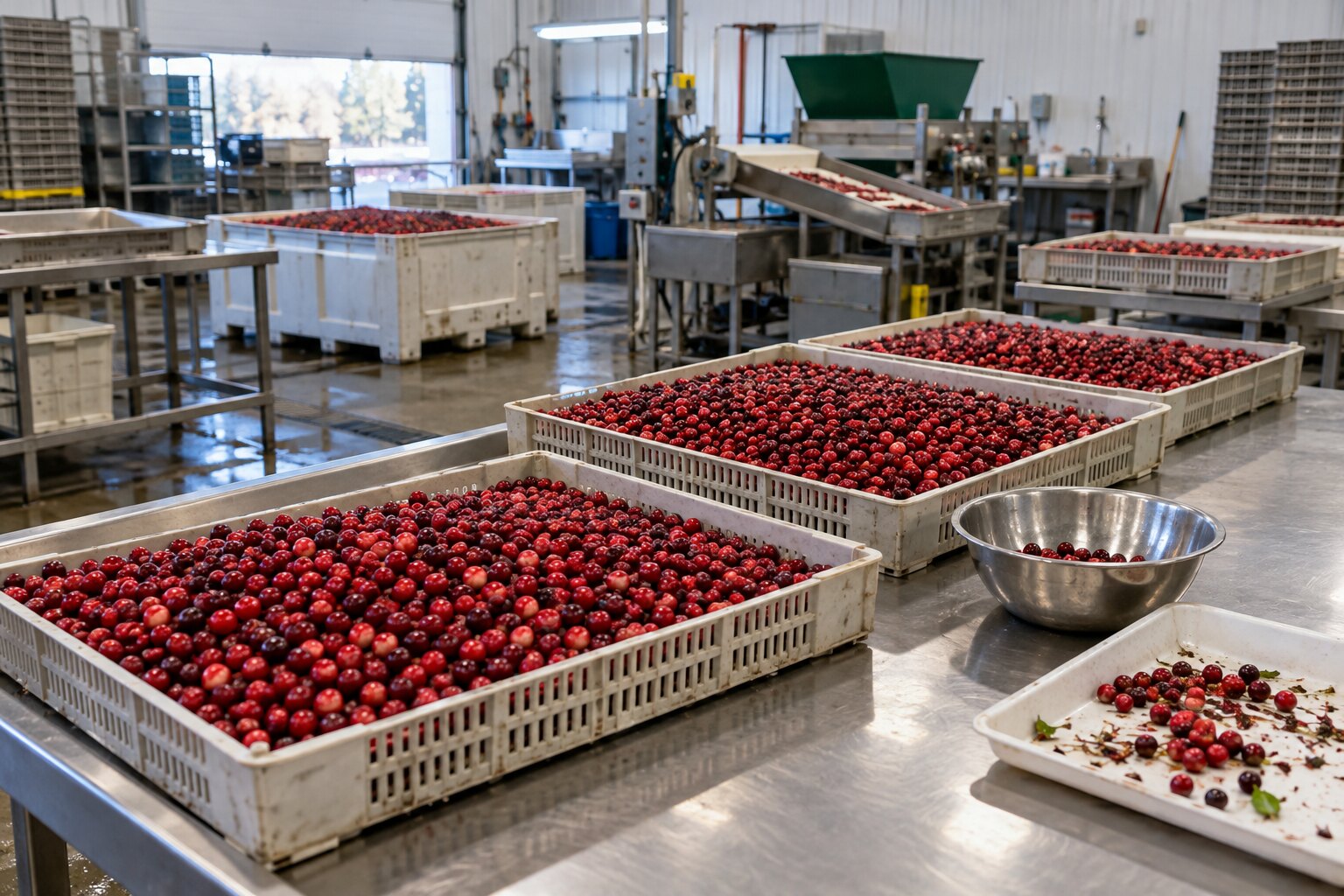
SOUTH BAR, Oregon — The South Bar Growers Cooperative is holding 18 tons of cranberries from one coastal bog after inspectors found clear liquid and small aquatic animals inside several intact berries. The crop has been isolated at the cooperative's packing room and will not be sold while agricultural specialists examine samples. No illness or consumer complaint has been reported.
The finding was made Friday during routine grading at the Beargrass receiving station. Worker Lena Oro cut open a berry with an unusually pale center and found a cavity about the size of a pea. The space held colorless liquid and a translucent animal that moved when placed in a sample dish. Oro stopped the line and notified floor manager Joel Cask.
Cask and two employees opened 120 berries selected from three field bins. Nine contained cavities, and five held moving organisms between one-eighth and one-quarter inch long. The berries had firm skins, ordinary stems and no visible punctures. Their exterior color and weight fell within the range of fruit already accepted that morning.
Cooperative agronomist Priya Sen said cranberries can develop hollow centers after heat stress, inconsistent pollination or internal tissue breakdown. Insects may enter damaged fruit and leave little external evidence. She said neither condition normally leaves a sealed pocket of water large enough to support an animal through washing and dry handling.
The organisms have jointed bodies and multiple pairs of legs. Marine biologist Callum Reed, who reviewed microscope photographs for the cooperative, said they resemble juvenile amphipods found in brackish ditches near the coast. He declined to identify a species without preserved specimens. Amphipods do not develop inside fruit, he said, and the bog's irrigation water is fresh.
Grower Dan Marlow drained the affected section Saturday and walked the beds with Sen. They found ordinary vine growth, ripe fruit and no standing saltwater. Conductivity tests from the irrigation canal and bog margins did not indicate a marine incursion. The nearest tidal creek is about two miles away and separated from the farm by a raised county road.
The hold will delay one processor shipment and may cost participating growers between $14,000 and $22,000 if the entire lot is discarded. Cooperative director Mae Renter said fruit from two other bogs received the same day passed inspection. Workers sanitized the grading line and are being paid for their scheduled shifts while the room handles other lots.
Renter asked employees not to post close-up photographs until the cooperative can distinguish the organisms from ordinary contaminants. A short video viewed by the Register shows one animal swimming in a shallow glass dish. It repeatedly returns to a torn fragment of berry skin and remains beneath it when the dish is moved under a lamp.
Samples were packed in separate coolers Sunday: unopened fruit, opened cavities, irrigation water and animals removed from the berries. The cooperative requested tests for salinity, common cranberry pests and bacterial spoilage. Renter said the purpose is to decide how much fruit must be destroyed, not to market the lot as unusual produce.
By Sunday evening, employees had opened 600 berries from the isolated bins. Thirty-seven contained liquid. The cavities remained clear even where the surrounding fruit had begun to dry, and the liquid in three samples measured within the salinity range of the nearby estuary. Sen said the result will be repeated by an outside laboratory before it is used in any decision.
The unopened sample cooler was stored overnight in a locked produce room with its drain covered. When staff returned Monday, a narrow trail of damp salt crystals crossed the room from the cooler to the drain. All seals remained numbered and intact. Inside the cooler, the berries were dry, but the animals could be heard making light taps against the walls of their unopened fruit.