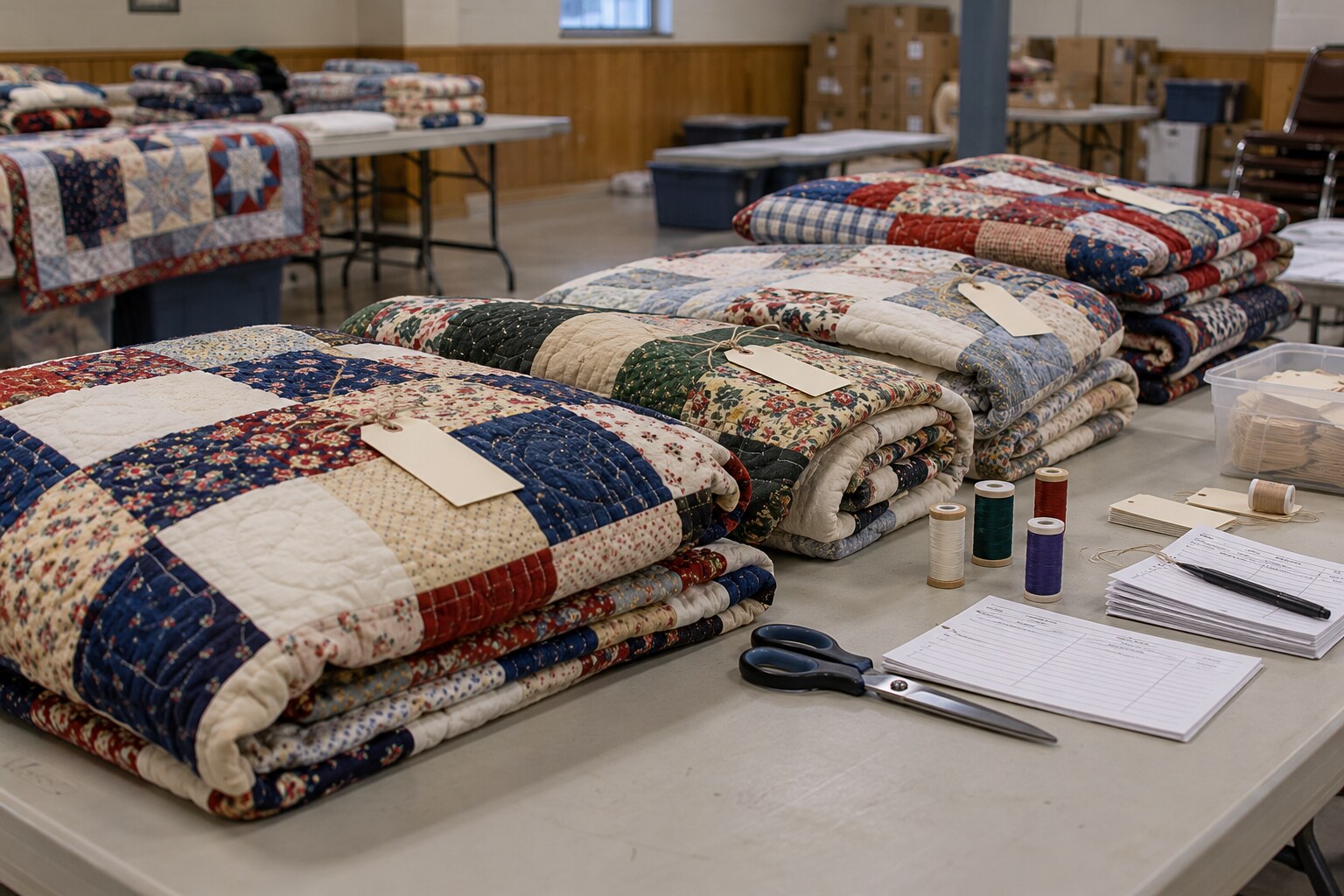
STONE MERCY, North Dakota — A church-based relief group has recalled 18 handmade quilts after seven recipients developed narrow skin marks that corresponded to seams, patches and repairs in the blankets. The Stone Mercy Mutual Room has suspended quilt distribution but will continue providing coats, groceries and utility assistance from its basement office.
The quilts were given last week to tenants whose apartments remained without heat during a boiler replacement. They came from the Mutual Room's regular stock of donated bedding and had been washed, dried and inspected by volunteers. Coordinator Prue Lammers said no chemical treatment or pest-control product was used.
Elena Stroud noticed the first marks Tuesday morning after sleeping beneath a blue-and-white quilt. A line of small, evenly spaced depressions crossed her shoulder and upper arm. The pattern matched the quilt's hand-stitched border, including one doubled stitch where a corner had been reinforced.
Stroud initially attributed the marks to pressure from the fabric. They remained visible after noon and became raised when she folded the quilt. When she opened it again, the marks flattened. Her husband recorded the change on a phone while the quilt lay on a table several feet away.
Six other recipients reported similar patterns. Two had parallel marks around old surgical scars. One man said a scar on his knee separated along a short section when a patch came loose from his blanket, though the surrounding skin did not bleed. An urgent-care clinician closed the superficial opening and found no sign of infection or allergic rash.
At the clinic, a nurse removed a blue cotton thread from beneath the surface of Stroud's shoulder using forceps. The thread was approximately three inches long and matched the quilt border in color and twist. Stroud's shirt and bedding were intact, and the skin above most of the thread had not been broken.
Pressure marks can reproduce a fabric pattern, and contact reactions sometimes follow dyes, detergents or fibers, dermatologist Lila Ansel said after reviewing photographs for the Mutual Room. Ansel said those explanations would not ordinarily place an unbroken length of sewing thread beneath intact skin or cause a healed scar to change with a distant seam.
Volunteers collected 15 of the quilts by Thursday. Three recipients asked to keep theirs and signed acknowledgments that distribution had been suspended. Lammers said the group will not enter a home or remove bedding without permission. It has provided plain thermal blankets and offered to cover related clinic charges.
The recalled quilts span different ages, fabrics and donors. Some were made recently by local sewing groups, while others arrived through estate donations. Volunteers found no common batting, thread brand or stitch pattern. The affected areas are not visibly stained and carry no unusual odor.
The county extension office sealed samples of fabric and the removed thread in separate envelopes for referral to a textile laboratory. During intake, the loose blue thread shortened by nearly half an inch when warmed beneath a task lamp. It returned to its original length after the lamp was moved.
Lammers stored the quilts flat in separate plastic bins rather than stacking them. On Friday morning, the reinforced corner of Stroud's quilt had pulled itself into a tight fold around the sealed evidence envelope placed beside it. Inside the envelope, the thread had drawn four small, regular loops through the paper without tearing either sealed edge.