WARREN GATE, Ohio — A neighborhood laundromat has closed eight dryers after employees removed pieces of felted lint that reproduced garments still turning in separate washing machines. Washers remain available, and the business is paying for customers to dry loads at another location two blocks away.
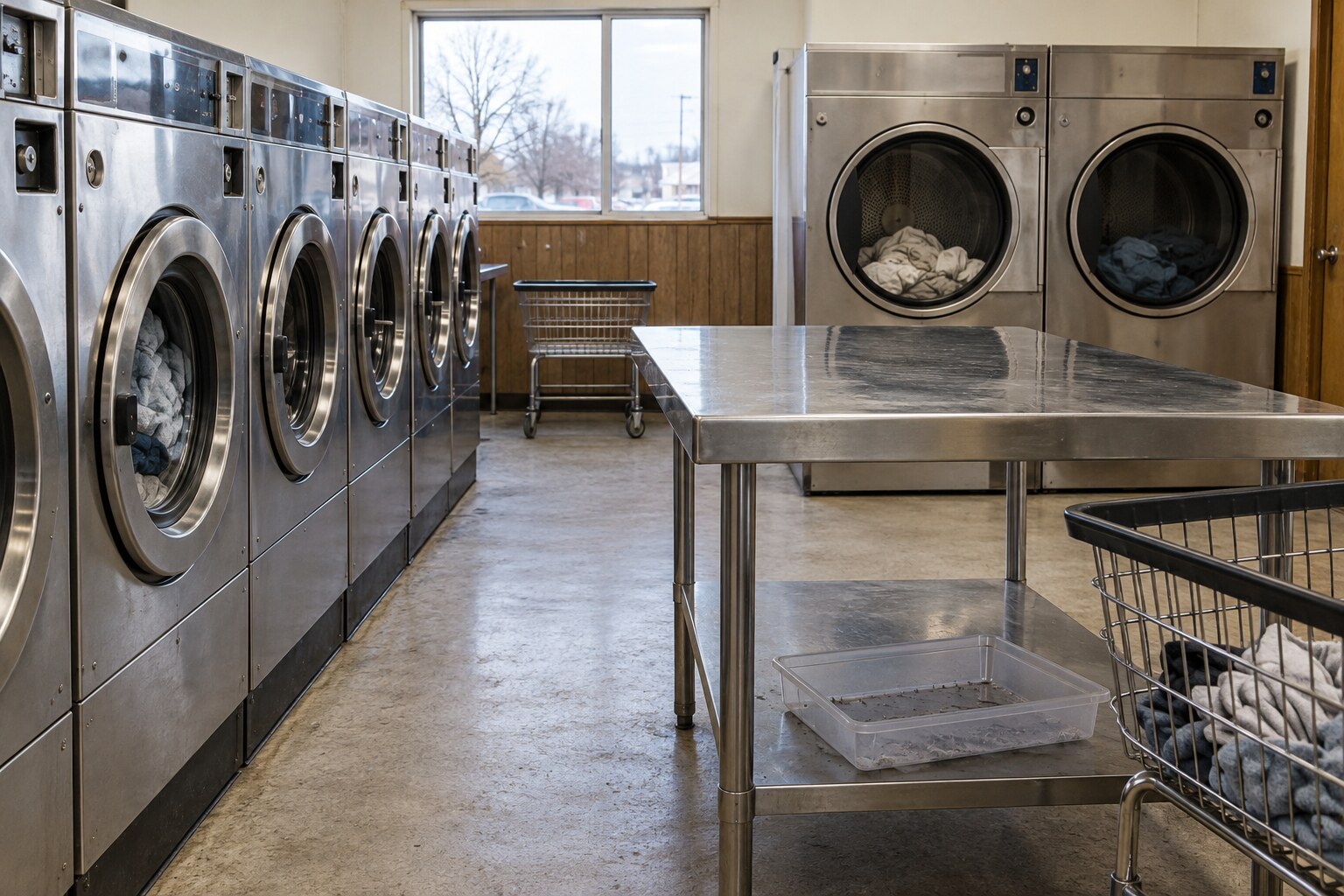
Warren Gate Laundry uses stacked stainless-steel dryers along one wall and front-loading washers along the other. Attendant Tessa Cole cleans each lint screen between customers. On Thursday morning, she found a gray piece about four inches long folded against the mesh of dryer 6 before anyone had used that machine.
The piece opened into the shape of a hooded sweatshirt, with two sleeves, a pocket and a darker line where a drawstring would be. Customer Len Voss was washing a full-size gray sweatshirt across the room. A bleach mark near its cuff appeared as a pale fleck in the lint model, though the sweatshirt had not entered a dryer and the two machines do not share ductwork.
Seven more forms appeared during the next hour. They included a child's striped sock, a work apron with a square name patch and a fitted sheet with one elastic corner turned inward. Each matched an item inside an active washer. Colors were made from ordinary mixed lint but separated into narrow bands that corresponded to the garments' fabric.
Owner Iva Rusk stopped the dryers after a customer tried to peel buttons from a lint copy of his shirt. The buttons were only flat circles of compacted fiber, but two detached cleanly and left thread-shaped impressions beneath them. Rusk returned dryer payments, provided bags and arranged free use of a nearby laundry's machines through Sunday.
Lint can mat into recognizable shapes when moisture, heat and airflow press fibers against a screen, said Caro Venn, an appliance technician who inspected the row. Repeated loads also leave enough colored fiber to suggest patterns from earlier clothing. Venn said the closed dryers were cold and empty, and none should have received lint from garments isolated inside the washers.
Customers reacted with curiosity until one miniature showed a narrow split beneath its right arm. The corresponding cotton shirt looked intact when removed from washer 11. As its owner lifted the wet shirt onto the folding table, the seam opened in the same place without tearing farther. The lint copy did not change after the full-size garment was set aside.
Rusk is retaining the forms only with customer permission. Three people took theirs home; four asked that the pieces be discarded after photographs were made. The apron copy remains in a sealed tray because its owner uses the garment for restaurant work and wants the service company to inspect the dryer before she decides what to keep.
Venn disconnected power and gas from the closed bank, removed the ducts and vacuumed each cabinet. The passages contained ordinary lint and two lost coins but no material connecting the machines. During the work, a miniature blue towel formed flat against the clean screen of dryer 2. The matching towel was folded on top of a cart and had not been washed that day.
The towel copy remained damp after six hours in the open tray. Rusk placed it beside the full-size towel at closing and covered both with clear plastic. By morning, the miniature had dried stiff. The towel beside it was still wet through its center, although the building heat was on and every other cloth left on the cart had dried.