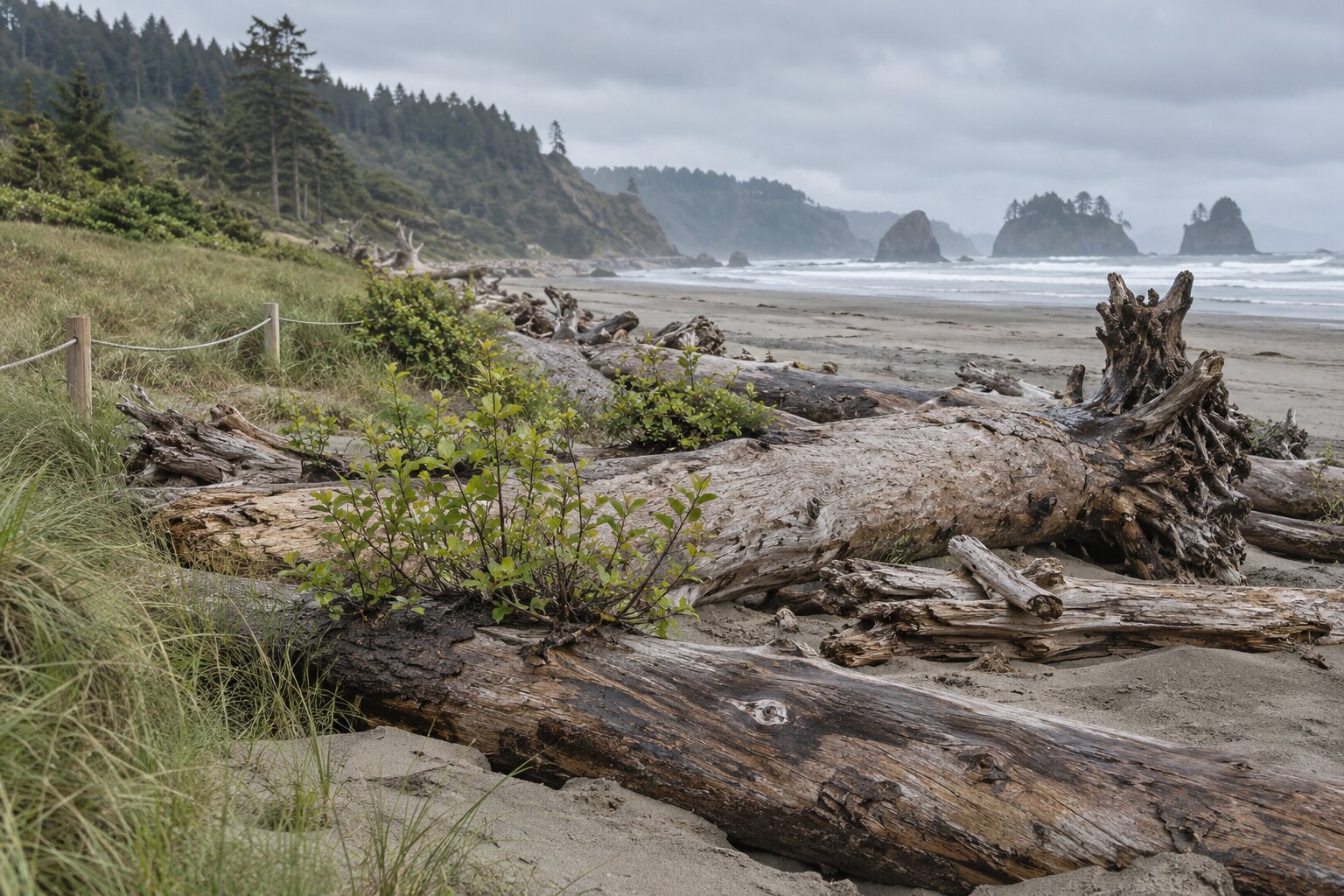
WHISTLER REACH, Oregon — A coastal service district has delayed its annual removal of large beach debris after seven storm-thrown alder trunks put down roots in dry sand above the high-tide line and produced fresh leaves. The public beach remains open, though crews have fenced a narrow section used by maintenance vehicles.
The district ordinarily moves unstable logs before winter because they can roll in surf or block emergency access. A September gale left about 40 trunks and root wads along a half-mile of shore. Workers marked the largest pieces for removal, then returned Monday to find pale roots extending from split ends into the sand.
By Tuesday, flexible shoots had emerged from trunks that carried no branches when photographed after the storm. The leaves were consistent with red alder, according to district ecologist Cora Linn. Several trunks also retained barnacles, salt stains and cavities bored by marine worms, evidence that they had spent substantial time in seawater before coming ashore.
Alder can sprout from damaged stumps and occasionally from cuttings kept wet, Linn said. It does not ordinarily establish from waterlogged logs without intact root crowns, particularly in shifting beach sand exposed to salt spray. Three of the rooted pieces have no bark over most of their length, and one was charred at both ends before it arrived.
Maintenance supervisor Orrin Bale canceled the loader work rather than break the new roots. The change leaves less turning room for the district's rescue truck, so temporary posts now reserve a second access lane near the north parking lot. Beach-cleanup volunteers were asked to collect plastic and rope without disturbing wood, leaves or the darkened sand around them.
The growth has drawn visitors from Whistler Reach and two nearby towns. District staff posted signs asking people not to water the trunks, carve initials or take cuttings. Someone tied ribbons to one shoot Tuesday night; workers removed them the next morning after a shorebird became tangled in the loose ends.
Linn and a state forester uncovered one root by hand. It descended more than four feet through dry upper sand before dividing into fine white fibers in a cooler layer. No freshwater seep is mapped beneath that part of the beach. A sample drawn from the sand around the fibers tasted fresh on a conductivity instrument, while pore water less than a yard away carried the expected salt.
The district has not determined where the logs entered the ocean. Growth rings and bark fragments suggest at least three ages, and one trunk bears an old timber-company brand used in a watershed more than 90 miles south. Bale said mixed drift is common after large storms and does not establish that the pieces traveled together.
Nearby residents have mostly supported leaving the wood in place, though a surf-school operator asked the district to preserve the vehicle lane before winter swells. The district will review the closure Friday and may anchor logs that remain hazardous. It will not attempt to transplant them while the roots are actively growing, Bale said.
At low tide Wednesday, narrow channels appeared around the seven rooted trunks, running downhill through otherwise dry sand. Clear water moved in the channels toward the ocean for about 20 minutes. Several juvenile salmon gathered at the outlets until the next wave reached them; the nearest stream enters the sea three miles away.
When the tide withdrew again, six channels stopped. Water continued to bead from the charred trunk and collect beneath its newest shoot. The leaves there had opened with their pale undersides facing the sand, and each held a thin line of freshwater along its central vein.